
Why Is My Fence Leaning After Heavy Rain in Savannah or Columbia?
Veterans Fence & Supply • October 15, 2026
VETERAN OPERATED
PREMIUM
QUALITY
HONEST
SERVICE
NO DIG
OPTIONS
Planning a Fence Project?
Whether you're replacing an old fence, securing a commercial property, or exploring gate options, our team is here to help you find the right solution for your property and budget.
Heavy rain can make a fence lean suddenly, but the storm is not always the only cause. Rain may soften or erode soil around a post and reveal a weakness that was already developing. A loose footing, decayed wood, repeated gate movement, or runoff concentrated along the fence line can all contribute.
The safest response is to inspect without pushing on the fence. Keep children and pets away from a section that could fall, and do not operate a gate that pulls against a leaning post. Photos taken from several angles can help document what changed.
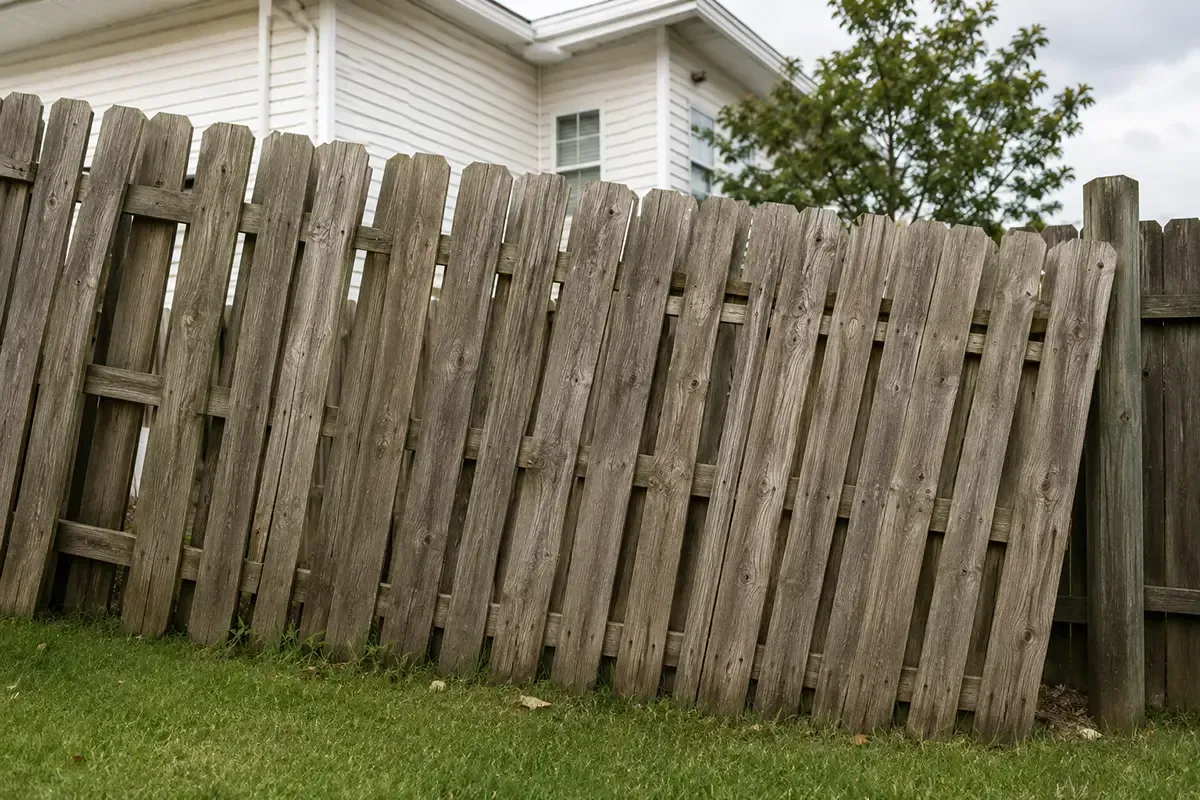
Rain can change the support around a fence post
NOAA's Savannah climate normals show that rain is a regular part of the local climate. Columbia also receives intense storms. Yet neighboring yards can respond differently because grading, fill, compaction, vegetation, downspouts, and drainage routes are different.
When soil becomes saturated, it may offer less support until it dries. Fast runoff can also carry soil away from the downhill side of a post. Clemson Extension's home-landscape water guidance explains that high-intensity or long-duration rain can contribute to erosion and flooding. Look for washed-out soil, a new channel, exposed concrete, or standing water near the lean.
The post or fence may have been weakening already
A sound fence should not be treated as disposable after one wet week. First identify the failed part. A wood post may be soft near ground level, a connection may have loosened, or a panel may be pulling against a post that has shifted. Metal and vinyl fences can also lean when support at the post changes.
Gates deserve special attention because opening and closing repeatedly loads the hinge post. If the gate drags, will not latch, or opens by itself after the storm, stop using it until the support and alignment are checked.
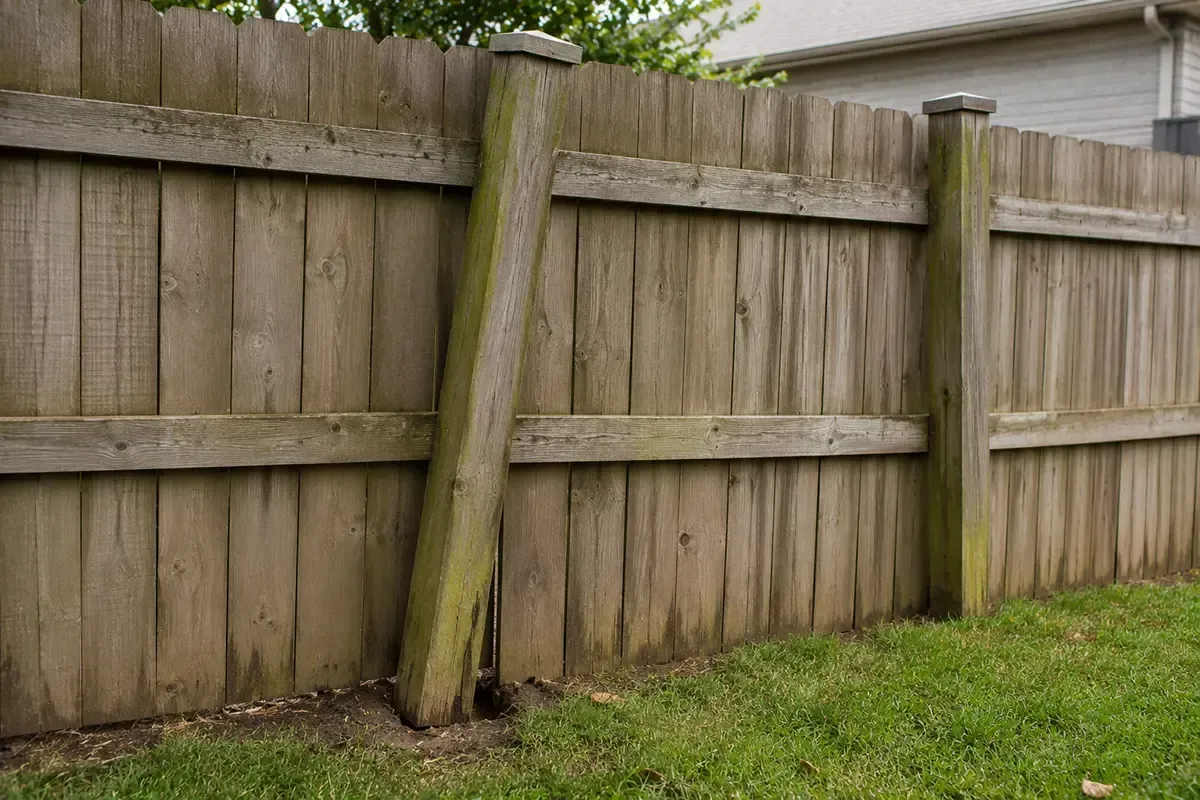
Document what changed before the ground dries
Take wide photos that include the leaning section, the ground on both sides, and the nearest gate or corner. Then photograph any exposed soil, washed mulch, standing water, cracked wood, or visible gap around a post. A complete view helps separate a single damaged component from movement that continues along several panels.
Write down when you first noticed the lean and whether it appeared during one storm or became more visible over several wet periods. Note downspout discharge, sprinkler use, recent landscaping, vehicle contact, and any soil work near the fence. These details do not prove a cause, but they give a professional a more useful starting point than the lean alone.
- Use a previous yard photo to compare the top line of the fence.
- Photograph runoff paths without walking through soft or eroded ground.
- Show whether a nearby gate has also lost alignment.
- Keep children and pets away from the affected section while it is unstable.
What a homeowner can check safely
- Stand back and compare several posts, not just the most obvious panel.
- Look for erosion, depressions, exposed footing material, or water flowing toward the fence.
- Check wood at the ground line for softness, splitting, or missing material without pulling on it.
- Notice whether the gate, latch, rails, or fasteners changed position.
- Photograph the area after rain and again after the soil has had time to drain.
| What you notice | Possible issue to review | Why it matters |
|---|---|---|
| Soil missing on one side | Runoff or erosion | The post may have lost lateral support |
| Whole post moves | Loose post or footing | The panel can pull neighboring sections |
| Wood soft at ground line | Moisture-related deterioration | The post may no longer carry the load |
| Gate drags or will not latch | Hinge-post movement | Repeated use can worsen the misalignment |
When to stop using the area
Treat the section as urgent when it visibly shifts in the wind, leans over a walkway, has exposed sharp hardware, or supports a gate that could drop. Also be cautious near standing water or storm-damaged electrical equipment. Temporary rope or cones can help keep people back, but a makeshift brace should not transfer the load to another weak object.
Veterans Fence & Supply provides Savannah residential fencing and Columbia residential fencing. A site review can determine whether the concern is limited to one post or reflects a larger drainage, alignment, or replacement issue.
Look beyond the one post that appears loose
A leaning panel can transfer stress to a corner, gate, or neighboring post. Ask for the connected section to be reviewed, not only the most visible gap. The assessment should consider the fence material, post support, wood condition, hardware, surrounding grade, and the route water takes across the property.
For a Savannah-area yard, pay attention to low spots and repeated runoff after heavy rain. For a Columbia-area yard, make the same property-specific observation rather than assuming every neighborhood has one soil condition. Veterans Fence & Supply serves both markets, but the recommendation still needs to come from what is visible at the individual home.
- Identify the closest corner and gate because they change how the section is loaded.
- Share any planned drainage or landscaping work before fence replacement is discussed.
- Ask which parts are stable enough to remain and which require further evaluation.
Do not prop the fence with loose household objects or try to straighten it by pushing. A temporary-looking support can shift without warning. Restrict access, keep the area visible, and use the site review to decide whether the affected section needs correction, replacement planning, or coordination with drainage or landscape work.
Frequently Asked Questions
Will a leaning fence straighten after the soil dries?
It may move slightly as soil drains, but do not assume it is stable. A shifted post, eroded support, decayed wood, or loose connection still needs to be identified.
Can I push the fence upright and pack soil around the post?
That can hide the cause and may be unsafe on a heavy section. The post, footing, soil support, drainage, and connections should be checked before choosing a correction.
Why did the gate start dragging after the storm?
The hinge post may have shifted, soil may have moved, or the frame and hardware may be out of alignment. Stop forcing the gate, since repeated use can add stress.
Get the cause checked before the next storm
Take clear photos and note where water traveled across the yard. Then contact Veterans Fence & Supply to review the leaning section and discuss a stable path forward for your Savannah- or Columbia-area property.
FENCING TIPS & PROJECT RESOURCES
Explore More Fence & Gate Articles
Stay informed with expert advice from Veterans Fence & Supply. Browse more articles covering residential fencing, commercial fencing, gate systems, fence repair, maintenance tips, material comparisons, project planning, and everything you need to make confident decisions for your home or business.
Ready to Start Your Fence or Gate Project?
Whether you're planning a new fence installation, commercial security project, automatic gate system, or professional fence repair, Veterans Fence & Supply is here to help. Contact our team today to request your free estimate.
